
Brand messaging is all about nailing the tone of voice for your brand, crafting clear communication lines, and defining the core messages that resonate with your audience. Your brand messaging guidelines will be directly shaped by your company’s market segment, the products you offer, and the services you provide.
It is the defined content pattern that explains who your brand is and what its core values are.
Brand messaging is the blend of language, specific terms, and the tone of voice your company uses every time it connects with its audience.
Ready to get consistent with the copy your brand distributes? Let’s dive into all the components and steps you need to know in order to produce effective brand messaging guidelines.
I: Audience Definition
WHO are you speaking to? Before you decide anything about messaging guidelines, you have to understand your target audience.
If you are pre-launch, your target audience will be slightly hypothetical. It will break down your audience into blocks that you assume will purchase your product or services.
If you’ve been running for some time, then your target audiences should come from business analytics (i.e. CRM, e-commerce, or social media data) that shows your brand’s average consumer profile.
Here’s an important note regardless of what stage your business is in: these audiences are not set in stone. Expect to tweak audience details at least annually or if you change anything about your business offerings or positioning.
Additionally, you can create an audience profile for an audience that you don’t sell to yet, but have a goal to reach in the near future.
Defining your audience will help you craft your marketing messages AND provide an engagement strategy that leads to increased demand.
Audience definition will impact your brand’s tone of voice, use of certain terminology, general communication style, and communication channels your brand will distribute messaging through.

II: Competitor Analysis
Why analyze your competitors? Understanding what your competitors are doing helps you identify gaps in the market, differentiate your brand, and learn from their successes and mistakes. You don’t want to sound redundant, but you don’t want to be completely off the mark.
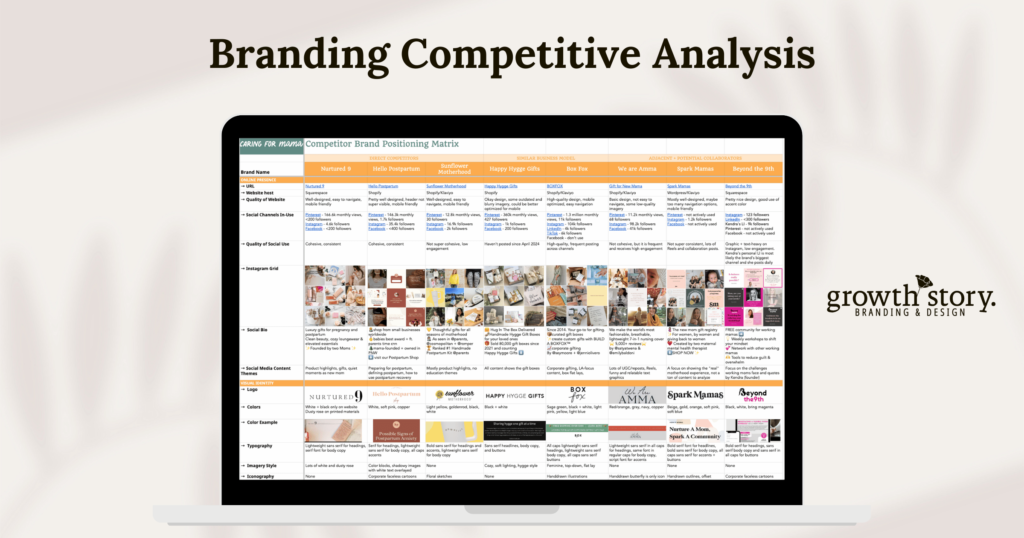
This analysis gives you an inside look into the strengths and weaknesses of competitors and adjacent brands. All the information you need is publicly available and seeing it side-by-side will provide you with insights for your own brand’s direction.
Step 1: Identify Your Competitors
Start by listing your direct and indirect competitors. Direct competitors offer the same products or services as you do, while indirect competitors offer different products or services that fulfill the same need or solve the same problem. Use online searches, brand websites, and social media to find and understand these competitors.
Step 2: Analyze Their Messaging
Look at how your competitors communicate with their audience. What tone do they use? What are their key messages and slogans? How do they present their brand values? Pay attention to their website content, social media posts, advertising campaigns, and customer reviews.
Step 3: Identify Strengths and Weaknesses
Determine what your competitors are doing well and where they fall short. Do they have a strong, consistent tone of voice? Are their messages clear and compelling? Are they effectively reaching and engaging their target audience? Understanding these aspects will help you pinpoint opportunities for your own brand.
Step 4: Differentiate Your Brand
Use the insights from your competitor analysis to carve out your unique position in the market. What can you offer that they don’t? How can you present your brand in a way that is more appealing to your audience? Differentiating your brand messaging will make you more memorable and attractive to potential customers.
Step 5: Learn and Adapt
Competitor analysis isn’t a one-time task; it’s an ongoing process. Keep an eye on your competitors regularly to stay updated on their strategies and adjust your messaging accordingly.
Competitive analysis will help you ensure that your brand messaging is not only distinct but also resonates with your target audience, making every word count.
III: Defining Core Messages
What are the key messages you want to convey? Your core messages are the fundamental points you want your audience to understand and remember about your brand. These messages should reflect your brand’s mission, values, and unique selling propositions…let’s talk about what those are.
Defining A Brand’s Mission and Values
Start by clearly articulating your brand’s mission and core values. What does your brand stand for? What impact do you want to make? Your mission and values are the foundation upon which your core messages are built.
Brand Mission Statement vs. Vision Statement
A brand’s mission and brand vision statements serve distinct but complementary purposes in defining a brand’s strategic direction and goals.
Brand mission statements define the brand’s current purpose, objectives, and core activities. This statement focuses on what the brand does, who it serves, and how it delivers value in the present and near-term.
Brand vision statements articulate the brand’s long-term aspirations and the impact it aims to achieve on the future goals, market positioning, and societal or industry influence.
In summary, the brand mission focuses on the present and how the brand operates, while the brand vision is aspirational, focusing on the desired future impact and direction.
Together, the mission and vision statements ensure that all brand messaging is aligned, purposeful, and inspiring, effectively communicating both the brand’s current value and future ambitions.
Identifying Your Unique Selling Proposition (USP)
What sets your brand apart from the competition? Your USP is the unique benefit or feature that makes your product or service stand out. Clearly defining your USP will help you craft messages that highlight why customers should choose your brand over others.

Now You Can Develop Key Messages
Create 3-5 key messages that encapsulate the essence of your brand. These messages should be clear, concise, and memorable. They should convey your brand’s mission, values, and USP in a way that resonates with your audience. For example:
- “We provide eco-friendly packaging that helps reduce waste and protect the environment.”
- “Our products empower women to feel confident and beautiful in their own skin.”
- “We’re committed to innovation, offering AI-supported solutions that make your life easier.”
These key messages must be consistent across all communication channels. Channels include your website, social media posts, social media profiles, email marketing campaigns, and advertising campaign copy. Additionally, they should be reinforced at in-person networking events, over the phone customer support, and when external business partners speak about the brand.
IV: Establishing Brand Tone of Voice
There is a difference between what your brand is saying and how you say it. Your tone of voice is the style in which you communicate, encompassing the choice of words, sentence structure, and overall feel of your messages. It should align with your brand’s personality and resonate with your target audience.
Defining a Brand’s Personality
Begin by defining your brand’s personality. Is your brand playful and fun, or serious and professional? Is it friendly and approachable, or authoritative and expert?
Use adjectives to describe your brand personality, such as:
- Friendly
- Professional
- Innovative
- Trustworthy
- Bold
- Compassionate

Brand Tone of Voice Guidelines
Once you have this established, you can move on to developing tone of voice guidelines. These should cover various aspects of your communication style, including:
- Formality: Decide how formal or informal your language should be. Do you use contractions and casual language, or is your tone more formal and polished?
- Emotion: Determine the emotional tone you want to convey. Should your messages be enthusiastic and upbeat, calm and reassuring, or motivational and inspiring?
- Vocabulary: Choose words and phrases that align with your brand personality. Are there specific terms or jargon relevant to your industry that you should use or avoid?
- Sentence Structure: Define the complexity of your sentences. Do you use short, punchy sentences, or more complex and detailed ones?
Examples of slogans that convey brand voice:
- Spanx: “Don’t Worry, We’ve Got Your Butt Covered.”
- Disneyland: “The Happiest Place on Earth”
- L’Oreal: “Because we are all worth it.”
- Coola: “We are SPF Perfected.”
- Surfrider: “The Ocean Needs More Friends.”
- The Honest Company: “Honestly Safe. Honestly Healthy. Honestly Happy.”
- Glossier: “Skin First. Makeup Second. Smile Always.”
- Milk Bar: “Live Your Sweet Life.”
- Innocent Drinks: “We’re innocent drinks Ireland. We make tasty drinks. And we’re in Ireland.”
- Taco Bell: “Live Más.”
- Dollar Shave Club: “Shave Time. Shave Money.”
The more work you do to establish brand personality and tone of voice upfront, the more consistent your content will be, establishing brand recognition from the start.
V: Putting it All Together in a Messaging Guideline Document
Creating a comprehensive messaging guideline document ensures consistency and clarity across all brand communications.
Start by compiling all the elements: audience definitions, competitor analysis, core messages, and tone of voice guidelines. Organize the document into clear sections for easy reference.
Include practical examples and scenarios to illustrate how each element should be applied in different contexts, such as social media posts, emails, and website content. This helps team members understand how to use the guidelines effectively.

Ensure the document is accessible to everyone in your organization. A digital format, like a shared drive or an internal wiki, allows for easy updates and ensures that everyone is working with the latest information.
Regularly review and update the guidelines to keep them relevant as your brand evolves. By putting everything together in a guideline document, you create a unified and strong brand presence.
Can You Just Do This for Me?
Absolutely, we get it – crafting the perfect brand messaging guidelines can feel like a daunting task. But guess what? That’s exactly what we love to do at Growth Story!
We’re here to turn your brand’s narrative into something truly spectacular, with clear, compelling messages that resonate with your audience and make your brand shine.
So why stress over wordsmithing and tone-setting when you could be focusing on what you do best? Let us handle the heavy lifting. Our team of branding wizards will whip up messaging magic that captures your brand’s essence and propels you toward your goals.
Ready to take your brand messaging to the next level? Partner with Growth Story and watch your brand bloom. Drop us a message, and let’s start crafting your unforgettable story today!
Frequently Asked Questions
Creating brand messaging guidelines involves defining your brand’s tone of voice, core messages, and audience profiles. Start by understanding your target audience, analyzing competitors, and establishing your brand’s mission and values. Develop a comprehensive document that includes these elements for consistent communication. Hiring a professional branding studio can streamline this process, saving you time and money while ensuring your brand messaging is impactful and cohesive.
To create your own brand guidelines, define your brand’s tone, core messages, and visual elements. Understand your target audience and analyze competitors. Document everything in a comprehensive guide for consistent use. Branding studios use a logical process that may be more beneficial for your brand in the long run than a DIY approach.
Developing a messaging framework involves defining your brand’s tone of voice, core messages, and unique selling propositions. Start by understanding your target audience and analyzing competitors. Establish your brand’s mission, values, and personality. Create clear, consistent messages that resonate across all communication channels. Document these elements in a comprehensive guide.
To write brand messaging pillars, identify your brand’s core values, mission, and unique selling propositions. Understand your target audience and their needs. Create clear, concise statements that reflect these elements and ensure they resonate across all communication channels.