
If you’re reading this, then you know: for most accountants, tax season is nonstop. From February through mid-April your inbox is virtually overflowing and you’re running on reheated coffee and positive affirmations. During tax season, demand is not a problem.
But then April 15 passes, you wrap up your extension clients’ 1040s and finally come up for air. The calls slow down, the emails taper off, and business development goes quiet until next year.
You close the laptop, exhale, and tell yourself you’ll figure out the marketing after you get a little rest.
Or maybe you’ve felt underlying anxiety throughout tax season because even though you’re busier than ever, you know that an eight-month slow-down is looming.
But it doesn’t have to be that way.
The problem with most CPA marketing ideas
Most CPA marketing advice is built around tax season. But I’ve found that many of my CPA clients don’t want 1040s to be the foundation of their business. Sure, they’re happy to do them and they keep the lights on, but there’s so much more to CPA services, isn’t there?
Outside of tax season, your potential clients are starting businesses, hiring employees, navigating big life changes, and looking for the best firm to help them get it all right. They’re searching for answers online, they’re talking to AI, and they’re asking their network for referrals.
This is when they need to find you. And they will find you based on the quality of your website and content.
If your firm isn’t showing up on search engines or referrals are bouncing after looking at your website, it has nothing to do with how good you are at what you do.
It has everything to do with what your website and your content are (or aren’t) doing when you’re not actively in front of people.
CPA website copy that converts year-round
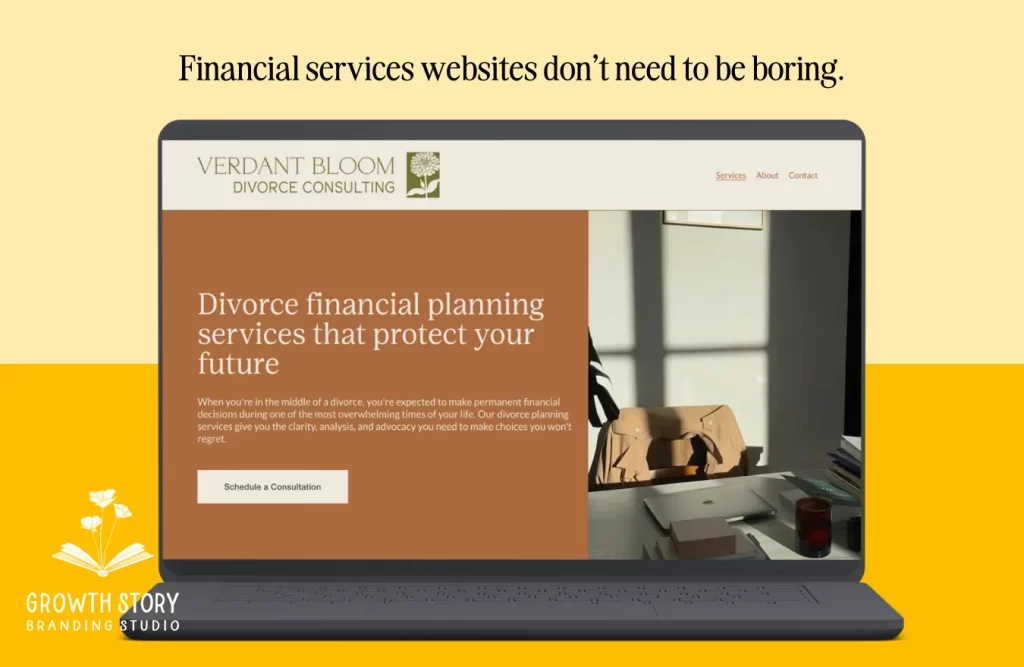
A lot of professional service websites were built to exist, not bring in new clients. They often have a services page, an about page, a contact form, and maybe a few stock photos of someone reviewing a spreadsheet.
CPA websites that share some of these attributes are not bad, but they’re not doing much to build trust with a stranger. They’re not differentiating you from the eleven other firms in your city. And they’re probably not showing up in search results when someone types “CPA firm in [your city].”
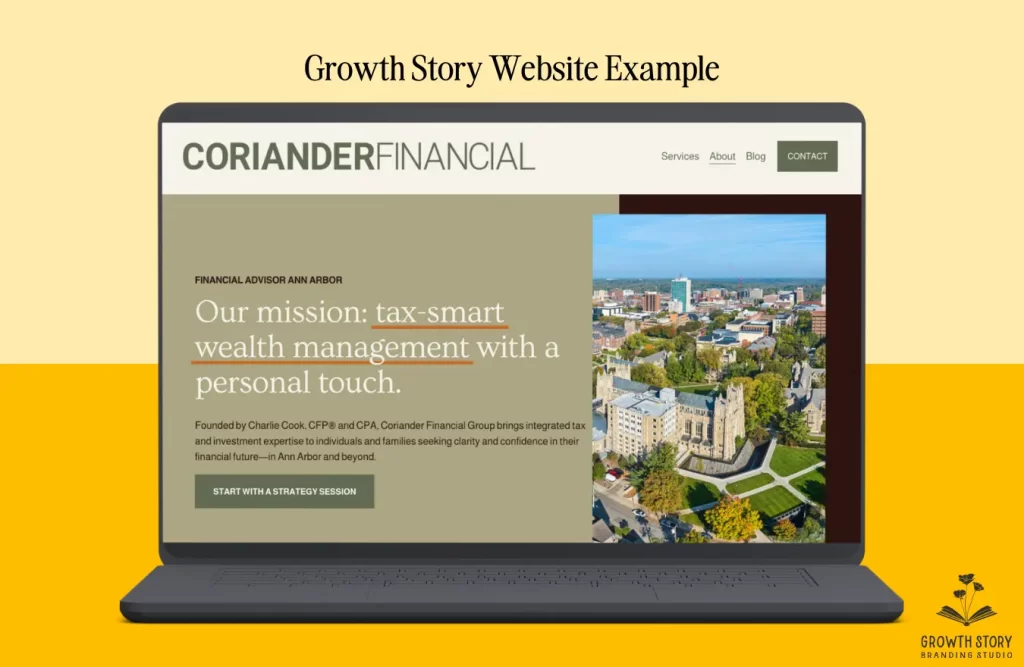
A high-quality website becomes an essential business development tool. It speaks directly to the kind of client you really want, answers the questions they’re already asking before they ever talk to you face-to-face, and builds enough trust that reaching out feels like an obvious next step. This positions you and converts.
It should tell a story that speaks directly to your most ideal client.
- What are they feeling when they are searching for you?
- What is it that they desire?
- How can you help them?
- Why are you the best firm for them?
- What makes you different?
- What are other people saying about their experience working with you?
- What do they need to do to get the process started?
The other critical purpose of a website: become the hub that any CPA content marketing effort points back to.
Let’s get into what that looks like.
Two can’t skip accountant content marketing ideas
When it comes to year-round visibility, two tools do the most consistent work: your blog and an email newsletter. They have different jobs, and they’re most effective when you treat them that way.
What goes in a CPA blog
Your blog is a long game. It builds over time, gets indexed by search engines, and becomes the standing answer to questions your ideal clients are already searching.
A well-written post about mid-year tax planning for S-corp owners doesn’t expire. It can bring in traffic for years.
Do you really need a CPA newsletter?
Your email newsletter is a short game. It keeps you in front of people who already know and trust you, the ones who just need a nudge to pick up the phone or book a meeting.
The CPA email newsletter is a little reminder outside of tax season that you still exist, you know your stuff, and you do things other than tax prep.
Together, the blog and email newsletter create a loop:
New readers find you through search, land on your blog, and subscribe to your list.
Existing clients stay warm through email and refer you to people in their network.
Those referrals land on your website, see that you clearly know what you’re talking about, and reach out.
This is a content machine that requires consistent maintenance without the constant algorithm-pleasing that social media mandates.
You don’t need to be posting every day or writing essays twice a week. With a solid website to anchor content and consistency over time, this type of content tells Google your website is active and relevant for your audience.
When Google knows your website is legit, it serves it more frequently in search results. The result is more website traffic and waking up to consultation requests in your inbox.
When to invest in a CPA website
The most successful year-round CPA firms are the ones who invested in their visibility when they had the mental space to do it.
A smart CPA marketing strategy isn’t complicated: a website that positions you well and content that keeps you relevant all twelve months.
The right time to build that foundation is when you have the bandwidth to think clearly about how your firm shows up and who you’re speaking to.
CPA website ideas checklist:
Right after your busy season ends, do some journaling about the following:
- How your clients described their current state and desired state during their consultation meeting
- Write out all the details of your most favorite client. Think: the ones who didn’t complain about your prices, flowed through your process with ease, and who you truly enjoyed talking to.
- Audit your services. What do you want to do more of? What can you package together?
- Think about your firm’s approach. What makes it different? What do your clients love about it? What resonates with your most favorite clients? Think about things like being woman-owned, family-run, nonprofit or environmental causes you support, local memberships, etc. It could be something as simple as the office dog everyone loves seeing.
- Write out your client process. What tasks do you repeat for every client? What’s the typical flow and timeline?
Then, when you feel ready, contact me to help pull all of this together into a brand and website that makes your ideal clients think “this is exactly the CPA firm I’ve been looking for.”
Getting started with a CPA firm brand strategy
We begin every project with a strategy session during which we review all of those questions in the checklist above along with many more. Then, we’ll create a polished brand strategy that includes:
- Current situation assessment
- Brand opportunities
- Main brand goal
- Positioning
- Messaging strategy
- Content marketing topics
- Implementation plan
- Recommended sitemap
Basically, everything you need to get your CPA firm’s funnel and website working the way they’re meant to.
Sound like something you need so you can let go of the tax season feast or famine cycle? Let’s start with a 30-minute meeting to see if it’s a good mutual fit.
FAQs about CPA marketing ideas
When it comes to publishing CPA blogs, consistency is key. We recommend 1-2 blogs per month. Content should be timely and relevant. For our retainer clients, we publish 2 blogs a month and consistently see increases in impressions and clicks from search.
For accountants, an email newsletter is a great nurturing tool to use for people who land on your website but might not be quite ready to convert as a client yet. Consistent email newsletters (monthly or quarterly) reminds prospective clients that your firm exists, and keeps them top-of-mind for when the time is right. It also gives you a space to send updates about your firm, new service offerings, recent news or podcast features, and personal updates, if you choose.
The content on CPA and accountant websites should speak directly to your firm’s target client. It should address the pain points they’re experiencing and their desired state. The content should express empathy and back it up with your credentials. It should very clearly outline the services you offer and the process a client goes through when they work with you. Lastly, it must make it clear what the next step is to work with you (i.e. booking a consultation).
If your firm is smaller or you operate on your own, a marketing agency for CPA firms might be too expensive and offer too much for your needs. Working with a boutique marketing studio like Growth Story at this stage will help offload the marketing tasks that always get pushed to the bottom of your list and ensure that the website continues working as a business development tool to bring in new clients.