
When you’re writing the copy, or words, for your firm’s website, you may fear putting too much content on your homepage. If it’s long, will your prospects get overwhelmed and click off to another firm’s site? Having a complete, strategic homepage is a key component of building a website that functions as a business tool for your practice.
Why Sufficient Content on Your Homepage Matters
Your homepage likely gets more views than any other page on your website. Consider the website 5-second rule: visitors must be able to tell what you do in 5 seconds or less, or they’re clicking off to another website.
Your homepage functions as a table of contents for your website. It’s a jumping off point for visitors to get to where they need to go, whether that’s to contact you, join your email list, learn more about your services, or read up about your firm.
An effective homepage is designed like a well-organized restaurant menu. If someone knows they want the burger, they can find it quickly. But if someone is new to the restaurant, they can easily explore all the different sections without feeling lost or confused.
The goal isn’t to make your homepage lengthy for no reason or too short and concise; it’s to make it layered. Sufficient content on your homepage matters for a variety of reasons and contributes to your website converting.
More Context for Search Engines
Search engines, such as Google or Bing, need context in order to know exactly what your business is about. They can’t present your firm to your prospective clients if they aren’t sure what services you offer, where you’re located, and how you help your clients.
By including adequate information on your homepage, you’re giving search engines more opportunities to understand your firm. This means when a prospect has a problem that your firm solves, you’re more likely to show up on Google for them.
Opportunities to Show Up in AI Searches
Similarly, AI searches need context now more than ever. It isn’t uncommon for someone to add a lengthy request to ChatGPT, and your homepage has to cover all their requirements in order to show up.
For example, if someone is entering an AI prompt looking for a financial group, they may include:
- Financial support for divorce
- Women-owned
- $4,000 maximum budget
- Free consultation
Providing more context for AI searches is important, as those requests are getting more and more specific.
Serves Prospective Clients
Including sufficient content on your homepage is helpful for your prospects, because it answers their questions. It tells them what you do, how you can support them, and why they should trust you with the transformation they hope to achieve.
A confused website visitor won’t buy, but a website visitor that feels seen, heard, and understood through your words is much more likely to book a consultation. Providing information upfront for your prospective clients serves them before you even have to hop on a phone call.
6 Website Visitor Types
Each person landing on your website falls into one of these six categories. Your content must appeal to all of them, or else you’re only supporting a small percentage of website visitors.
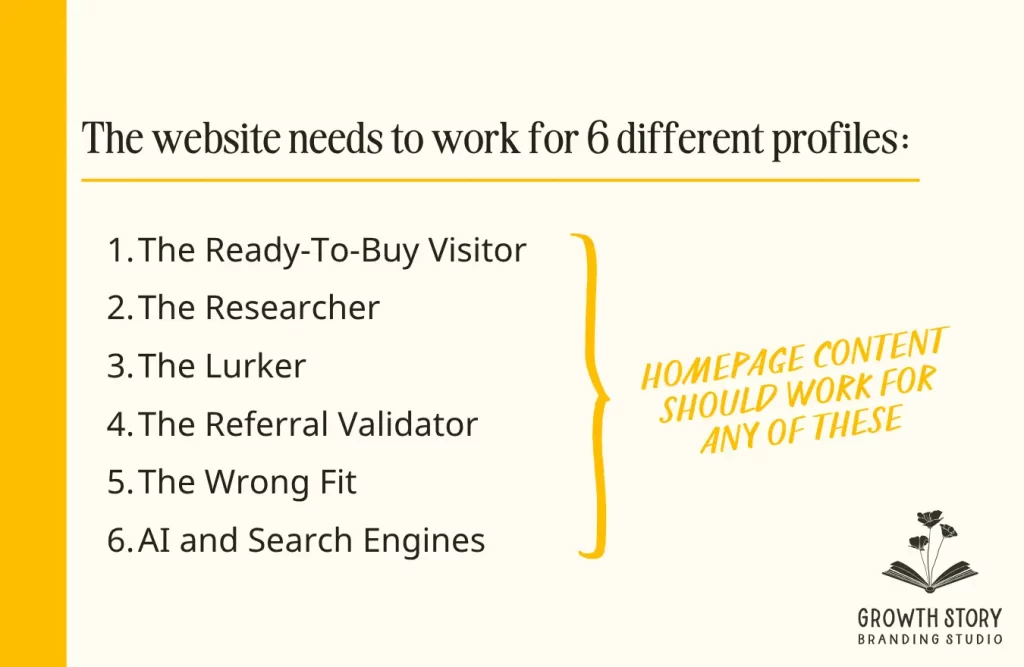
1. The Ready-to-Buy Visitor
Some people know they want to work with you already and don’t need further information. All they’re looking for is the booking button! Having lots of content on your homepage doesn’t bother them, as long as your call-to-action button is clear and easy to find.
This visitor could have connected with you at a networking event or followed you online for years. While we wish every website visitor was ready to buy, that simply isn’t the case—but with time and strategy, visitors can shift from the other categories to ready to buy.
2. The Researcher
This type of website visitor needs information. They may be comparing you against similar firms, or they’re interested in learning more about you before deciding if you’re a good fit. They pay attention to detail and read every word, hoping to have their concerns addressed before booking a consultation.
3. The Lurker
This person is problem-aware, but they may not know how to solve their problem yet. They’re looking at what solutions exist for them.
The Lurker reads your content to learn more about what their life could look like after working with you. They may return to your website in a few months once they transition to the Ready-to-Buy Visitor type.
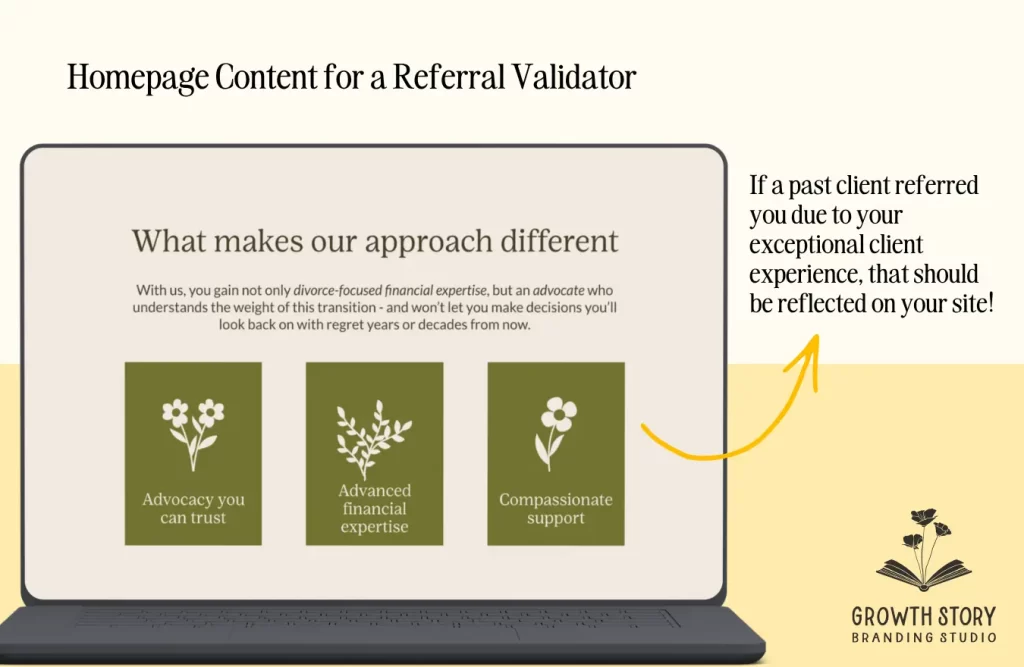
4. The Referral Validator
This person was referred to your firm by someone they trust, or through a professional directory. They’re landing on your website to confirm what they’ve been told about you and to ensure you’re the right fit to help them.
5. The Wrong Fit
This may sound surprising, but repelling the wrong clients is actually a good thing. It ensures that prospects who book a consultation really need support in your areas of expertise, and it saves everyone the time of hopping on a call if they don’t. This visitor type sees something on your website that makes them realize they aren’t a good fit for your services.
6. AI and Traditional Search Engines
As previously mentioned, AI and regular search engines rely on your website content to provide context. You’re writing for these tools, as well as for humans!
AI and traditional search engines scan your website content for keywords that back up what you do, so they can push your website in front of prospects searching relevant queries.
Build a Homepage That Tells a Story
Storytelling is a key factor when building a homepage that converts visitors into clients, because it makes your firm’s complex services relatable. Your homepage should captivate your audience, clearly communicate what you do and how you support clients, and drive prospects to book a consultation (or your desired call-to-action).
To learn more about designing a professional website for your firm that’s built to convert, click here to book a free consultation with Allie, the founder of Growth Story.
FAQs about Your Website Visitors and Homepage
A strong website homepage is layered with strategic content, tells a story, and clearly communicates what you do, how you help clients, and the transformation they can expect from working with you. It’s beautifully designed, without sacrificing strategy or a seamless user experience.
The most important section of your website homepage is the hero section, as it clearly tells prospects what you do. Your homepage should also include sections that make visitors feel seen and understood, expressing empathy for their situations.
Be sure to include a high-level overview of your services, a brief about section, and some social proof via testimonials or case studies. This blog post covers additional homepage must-haves to help you structure yours.
The length of your homepage doesn’t matter as much as the content itself. Be sure your content speaks to all six of the website visitor types. As a general rule, website homepages could fall anywhere between 300-1000 words.
Not all website homepages are designed well and built to convert, but here are some strategic examples to guide you. Click here for an example of a boutique law firm homepage, and click here to explore a financial firm’s homepage—both created by Growth Story.